Consignment note
No. CRS-1005
Origin: Surrey, BC
Car removal day, step by step
Car removal day in Surrey takes less of your time than most people expect. This guide walks through it in order, from clearing out the glovebox to what happens at the recycler.
- RequestedYou send the waybill or call
- BookedA number and a pickup time
- Picked upPaid, signed, loaded
- RecycledFluids out, metal sorted
Box 01Start to finish
Eight pieces of a removal day
Car removal day is short and mostly predictable. Here's each part in order, so nothing on the day is a surprise.
Piece 1 of 8
The night before
Go through the car one last time. Glovebox, centre console, trunk, the pockets behind the seats, the spare tire well. People leave garage openers, sunglasses, kids' drawings and the occasional passport. Once it's at the recycler, it's gone.
Find the registration and put it with your photo ID. If more than one person is named on it, make sure everyone can be there or knows to come. Pull the plates off if the bolts will cooperate. If they're rusted solid, leave them for the driver.
Piece 2 of 8
The morning of
Clear a path. Move the second car out of the driveway, roll the bins back, open the gate. If the car is in a parkade, have the fob ready and know which level and stall it's in. If you told us about a gate code, double-check it still works.
The driver will call or text when they're on the way. If something changes, like the car being moved or a different person meeting the truck, reply then.
Piece 3 of 8
The truck arrives
The driver looks the car over and checks it matches what you described: same vehicle, nothing major missing that wasn't mentioned. This is quick. It's not an inspection, just a check that the number we gave you still holds.
They'll also look at how the truck needs to sit to load it. On a narrow Surrey street that sometimes means a few minutes of repositioning.
Piece 4 of 8
Paperwork and payment
You show the registration and your photo ID. The driver pays you the amount we agreed. Then you sign the Transfer/Tax Form (APV9T) that the driver brings. Payment comes first, signing second. Keep your copy somewhere safe.
If anything about the paperwork doesn't look right to you, ask. There's no rush at this stage, and it's the one part that matters later.
Piece 5 of 8
Loading
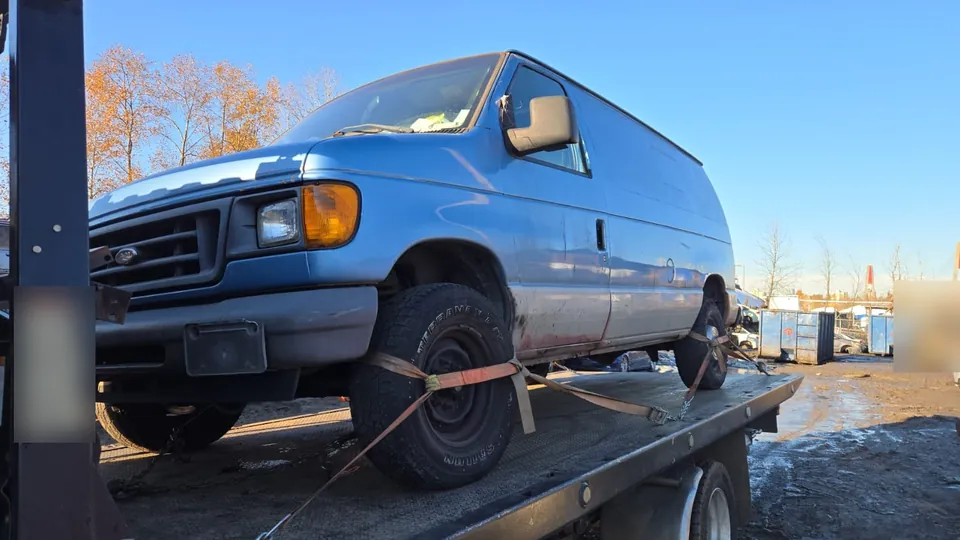
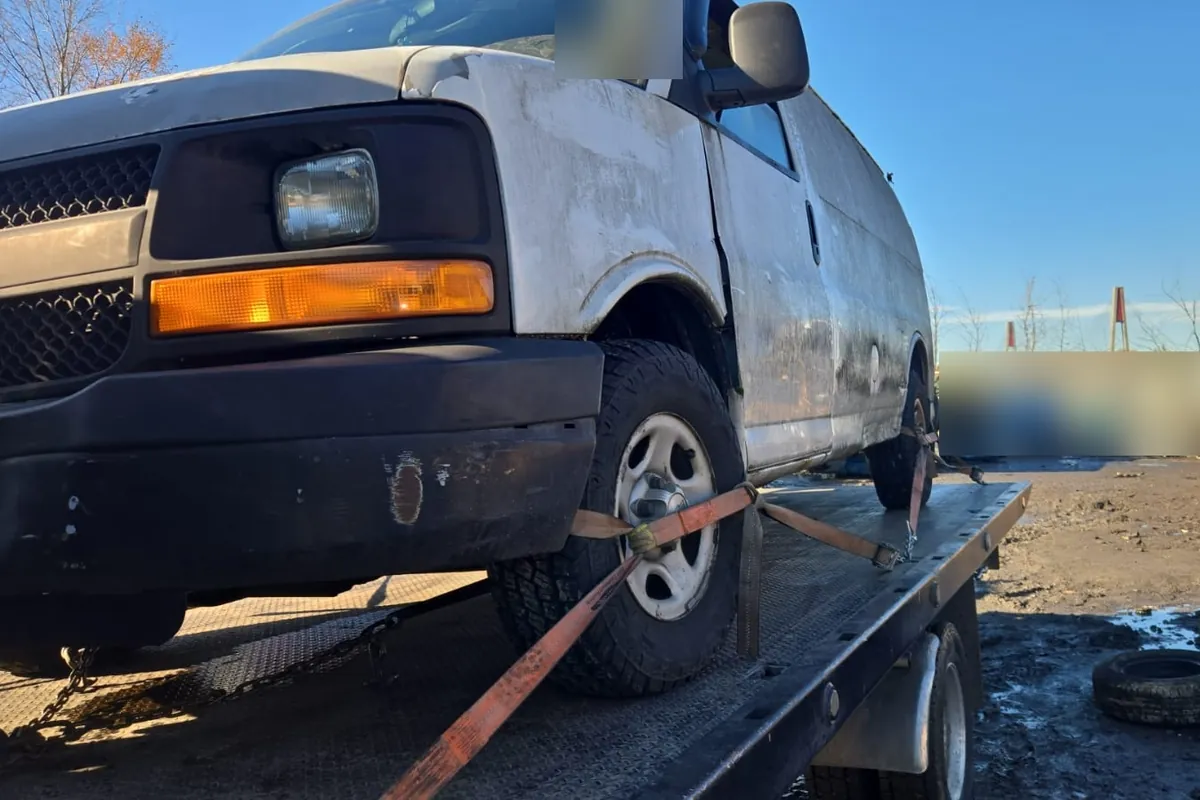
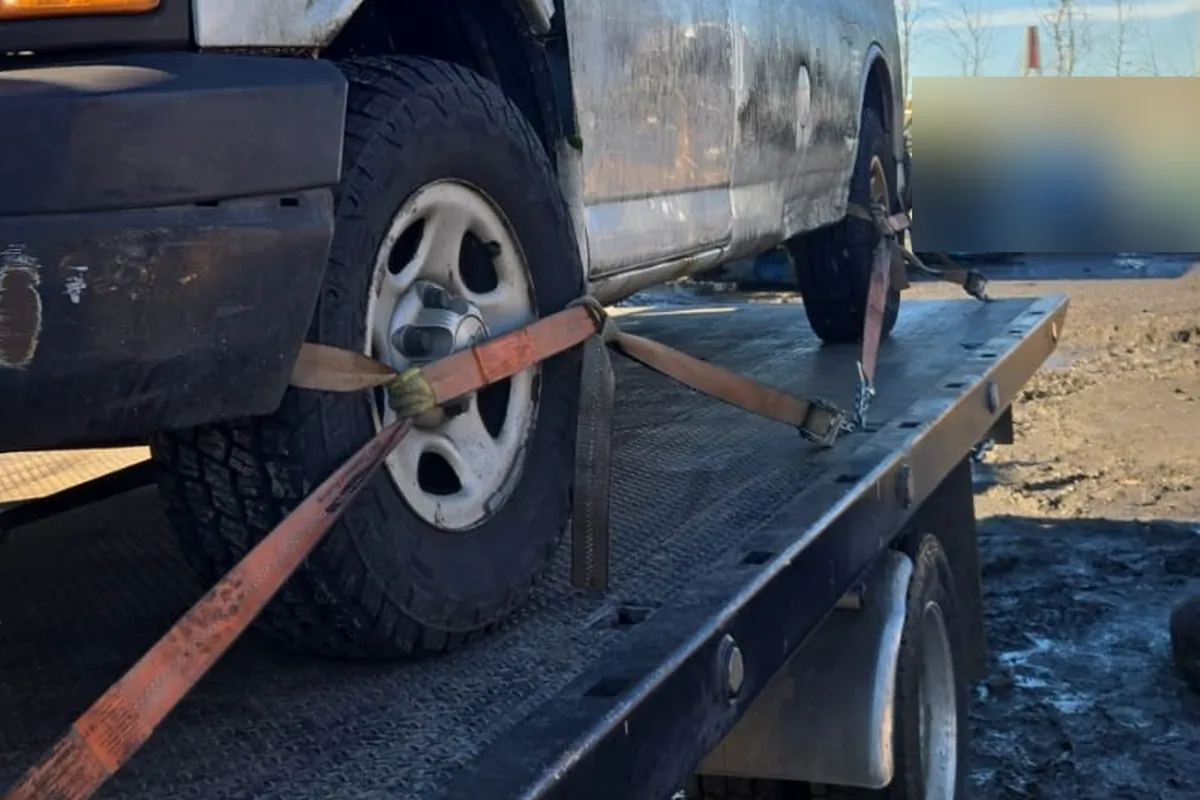
The car goes on the deck. A rolling car is winched up and steered on. A car that won't roll gets dollies under the stuck wheels first. Ratchet straps go over the tires and the driver checks everything is tight before pulling away. You don't need to watch, though plenty of people do.
Anything that could fall off on the road, like a loose bumper cover or a hanging mirror, gets tied down or tucked inside the car. A hatch that won't stay shut gets strapped too. It's the driver's call, and they'd rather take an extra minute than lose a part on the Fraser Highway.
Piece 6 of 8
If the plan changes
Things come up. If you need to move the time, call or text as early as you can and we'll find another slot. If a co-owner can't make it, it's usually better to rebook than to try to sort out a signature later.
Sometimes the car turns out to be stuck worse than anyone thought: sunk into a soft lawn after a week of rain, or blocked in by a neighbour's truck. The driver will tell you what it would take and whether it can be done that day. If it can't, nothing is signed and nobody is out of pocket.
Piece 7 of 8
After the truck leaves
Take the plates to an Autoplan broker. You can cancel the insurance, put the plates on your next vehicle, or hand them back. ICBC owns the plates, which is why they stay with you and not with the car.
Keep your copy of the transfer form with your records. If a parking ticket or toll notice ever turns up dated after the pickup, that copy shows the car wasn't yours anymore.
Piece 8 of 8
At the recycler
The car is drained of oil, coolant, fuel, brake fluid and washer fluid. The battery and tires come off, and parts containing mercury are removed. Then the shell is crushed and shredded, and the metal is sorted to be melted down. A good chunk of what was your car ends up as steel in something else.
Box 02At a glance
The four scans
- RequestedYou send the waybill or call
- BookedA number and a pickup time
- Picked upPaid, signed, loaded
- RecycledFluids out, metal sorted
Box 03Checklist
What to have in hand
- The registration (APV250), or a reprint from a broker.
- Photo ID for every owner on the registration.
- Keys, if you have them.
- The fob or code for a gate or parkade.
- Your executor or administrator paperwork, if the owner has passed away.
That's the whole list. The driver brings the Transfer/Tax Form, so you don't need to download or print anything.
Box 04Inquiry desk
Removal day questions
INQ-01Answered
How long does a pickup take?
The paperwork part is a few minutes. Loading depends on the car: a rolling car on a driveway goes on quickly, a seized car in a carport takes longer. You only need to be there for the signing.
INQ-02Answered
Should I cancel my insurance before or after?
After. Leave it alone until the car is gone and you have your signed copy of the transfer form. Then take the plates to an Autoplan broker and cancel or transfer the policy.
INQ-03Answered
Can someone else hand over the car for me?
Only if every registered owner signs. If you can't be there, talk to us first. Usually it's simpler to pick a time when you can be.
INQ-04Answered
What if the driver finds something different from what I described?
If the car is missing a major part you didn't mention, the driver will tell you before anything is signed and explain why the number changes. You can say no and nothing is lost.
INQ-05Answered
Do I get a receipt?
You keep your copy of the signed Transfer/Tax Form. That's the record that shows when the car stopped being yours, and it's the one ICBC cares about.
Ready to ship it out
That's removal day
If you're ready to book yours, call or text dispatch or fill in the waybill.